Understanding your dog's behavior is the first step toward changing it.
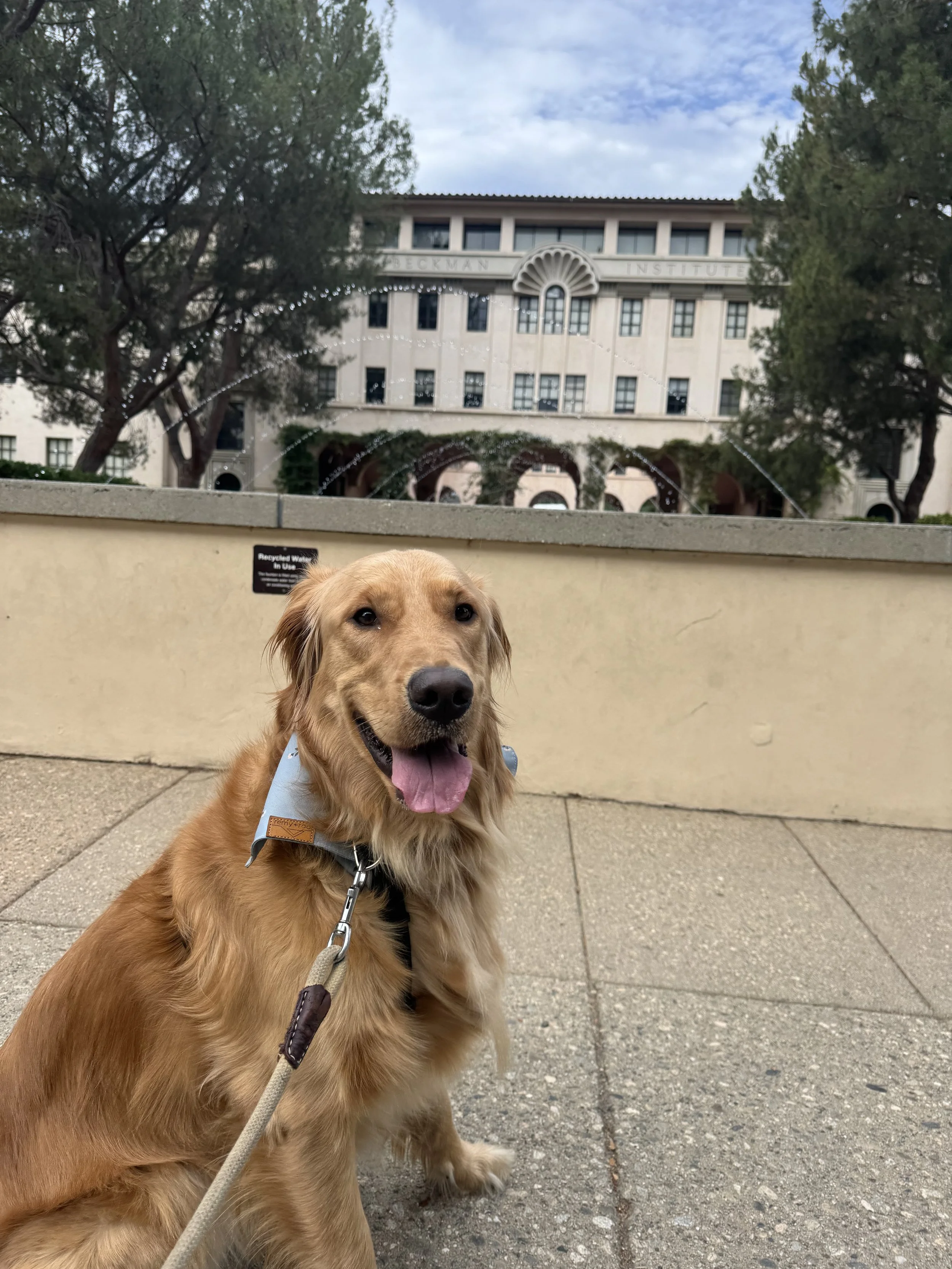
Willow is a Golden Retriever with two very different sides to her personality.
Around people? She's a total social butterfly. She loves attention, enjoys meeting new people, and is happy to make friends wherever she goes.
But around other dogs? That's a different story.
Willow would bark, lunge, and growl when encountering other dogs, especially on leash. What should have been enjoyable walks had become stressful experiences for everyone involved.
Her parents were overwhelmed, frustrated, and unsure where to start. They wanted to help Willow, but they didn't know how to navigate her reactions or what she actually needed from them.
And that's where our work together began.
Understanding the Dog Behind the Behavior
One of the biggest mistakes I see dog owners make is treating every behavior as an isolated problem.
A dog pulls, so we work on leash manners.
A dog barks, so we try to stop the barking.
A dog reacts to other dogs, so we focus entirely on getting them to stop reacting.
But behavior is information.
Before we can create meaningful change, we need to understand what's happening underneath the behavior.
Through my Canine Clarity approach, I look at the whole dog: their personality, motivations, stress levels, environment, communication style, and individual learning needs.
For Willow, her Canine Clarity profile revealed an interesting contrast:
She was a Social Butterfly with people, but a Reactor with dogs.
This distinction mattered because Willow wasn't struggling with every social interaction. Her challenges were much more specific.
Rather than labeling her as an aggressive dog or assuming she simply needed more socialization, we focused on understanding her emotional responses to other dogs and creating opportunities for her to experience those encounters differently.
Step 1: Regulation Before Training
Before asking Willow to make better decisions around other dogs, we needed to give her the opportunity to settle.
When a dog is already overwhelmed by their environment, adding more commands and expectations isn't necessarily going to help.
We started with a decompression walk in an environment that allowed us to observe other dogs while maintaining enough distance for Willow to feel comfortable.
This gave me an opportunity to assess:
How she responded to dogs at different distances.
What caused her stress to increase.
How quickly she could recover after seeing another dog.
What helped her disengage and reconnect with me.
We also worked on leash handling and foundational leash skills.
The goal wasn't to force Willow to ignore everything around her. It was to help her develop the ability to observe her environment without feeling like she needed to react to everything in it.
Step 2: Finding Her Threshold
One of the most important parts of working with reactive dogs is understanding their threshold.
Your dog's threshold is the point at which the intensity of a situation becomes too much for them to comfortably process and respond.
For Willow, this meant figuring out how close another dog could be before her barking, lunging, and other stress responses started to appear.
We practiced watching dogs from a manageable distance, allowing her to rest, and rewarding opportunities to disengage and reconnect.
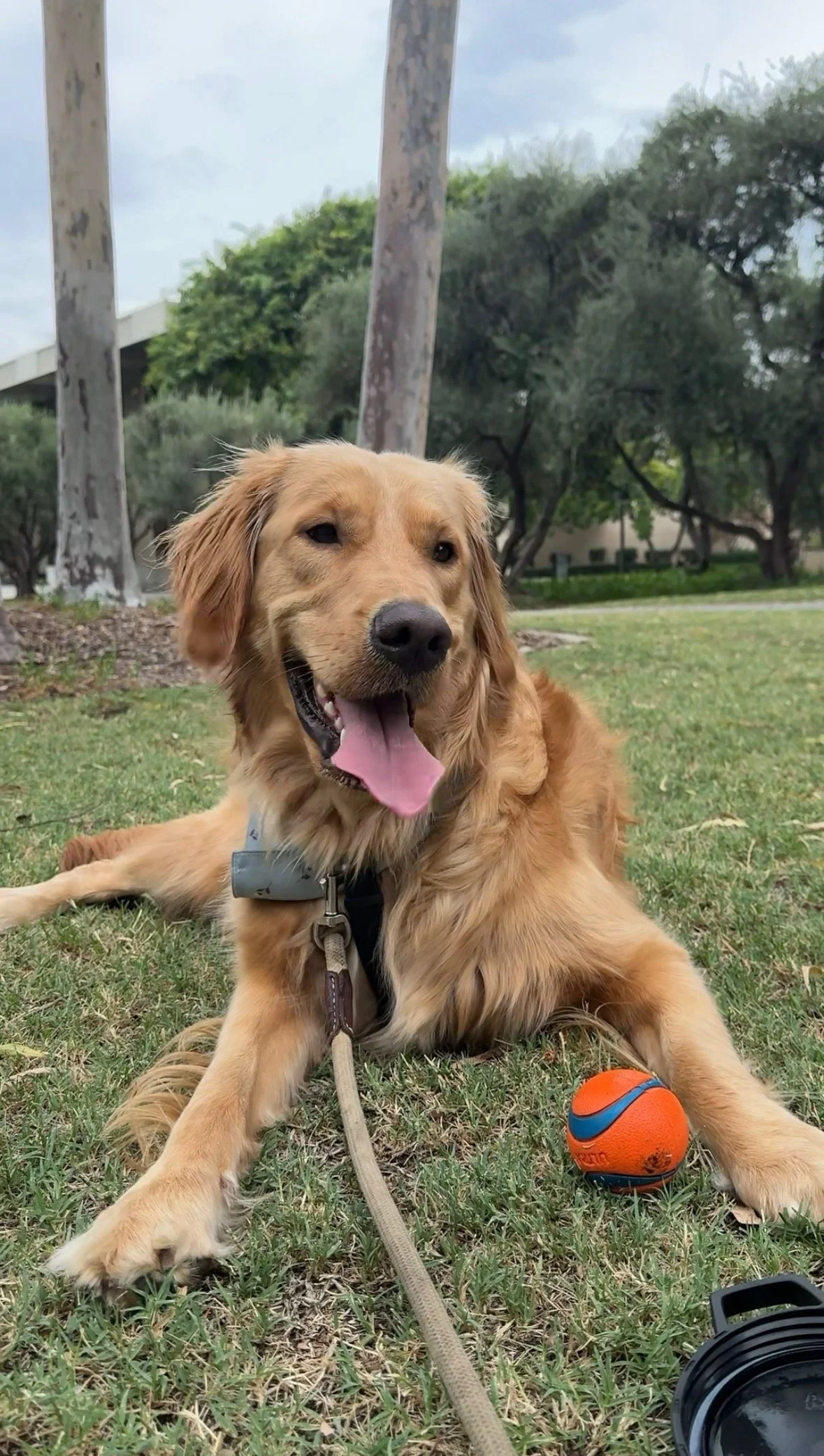
I also incorporated something I knew Willow loved: her ball!
Because Willow was highly motivated by play, her favorite ball became a valuable training tool. We used that motivation to create positive engagement and help redirect her attention when appropriate.
The important part? We weren't using the ball to distract her from every uncomfortable situation. We were building engagement while respecting what she could handle.
Step 3: Building Confidence Through Controlled Experiences
Once Willow was more comfortable observing dogs from a distance, it was time to introduce a carefully managed interaction.
I brought in Molly, one of the balanced dogs in my training pack.
This wasn't about throwing Willow into a dog park or expecting her to suddenly become best friends with another dog.
We needed a controlled environment, thoughtful introductions, and plenty of room to adjust based on Willow's responses.
At first, Willow lunged.
And that's okay. Progress isn't always a perfectly straight line.
We adjusted, gave her space, and allowed her time to settle before continuing.
As she became more comfortable, we gradually progressed through parallel walking, closer proximity, and eventually opportunities to sniff and walk alongside Molly.
We followed Willow's pace rather than rushing the process.
By the end of the session, Willow and Molly were able to sniff and walk alongside one another without the tension we had seen earlier.
It was a wonderful moment, but even more importantly, Willow had the opportunity to experience another dog without the interaction escalating into a stressful encounter.
Step 4: Turning Progress Into Everyday Life
Here's something I want every dog owner to understand:
One successful training session doesn't mean a behavior is permanently resolved.
Real transformation happens when the skills we practice in controlled environments begin to transfer into everyday life.
That's why my Canine Clarity approach focuses on more than just teaching commands.
We work on understanding body language, recognizing stress signals, improving communication, developing better leash habits, and helping owners make thoughtful decisions in real-world situations.
The goal is to give both the dog and their human the skills to navigate everyday life with more confidence.
Because I don't want owners relying on a trainer to manage every difficult situation. I want them to understand their dogs well enough to make those decisions themselves.
What Willow Taught Us About Canine Clarity
Willow's transformation wasn't about changing her personality or expecting her to love every dog she meets.
It was about understanding her individual needs, identifying what was contributing to her reactions, and creating a thoughtful training process that allowed her to make progress.
She reminded us that a dog can be incredibly social in one environment and struggle in another.
And that's exactly why cookie-cutter training plans don't work for every dog.
Your dog isn't a collection of bad habits that need to be corrected. They're an individual with their own motivations, experiences, communication style, and emotional needs.
When we take the time to understand those things, we can stop guessing and start making meaningful progress.
That's Canine Clarity.
And Willow, I'm so proud of you!
Is Your Dog Struggling Around Other Dogs?
If walks have become stressful, your dog barks or lunges at other dogs, or you feel like you're constantly trying to manage everyone's emotions (including your own), you're not alone.
And you don't have to figure it all out through trial and error.
The Canine Clarity Method helps you understand your dog's individual needs, build better communication, and create a training plan that makes sense for the dog standing in front of you.
Because the goal isn't just a dog who listens.
It's a dog you understand.
Ready to find your dog's clarity?