Social Hour, Fight Club, or Chaos Simulator?
Dog parks are actually a pretty new invention in human history. They didn’t really take off until the early 1980s, around the same time leash laws started being enforced more seriously in the U.S. Fast-forward to today and we now have over 1,000 dog parks nationwide.
They’ve become especially popular in cities where green space is limited and dog ownership is booming. In theory? A dream. In practice? Sometimes… a social experiment.
Dog parks are usually located near sports fields, playgrounds, and picnic areas, which makes them a social hub for everyone. Dogs get to run free, humans get to chat, and everyone pretends they’re totally watching their dog the whole time. (We’ll circle back to that.)
The Not-So-Great Stuff (AKA Why Trainers Have Opinions)
Let’s start with design, because honestly…who approved this?
Most dog parks have a double-gate entry so you can unleash your dog safely before going in. Sounds great… except many dogs love to camp out right by that entrance. So when a new dog walks in, they’re immediately met with a group of dogs staring, hovering, and sniffing like they’re being interviewed for a job they didn’t apply for.
That alone can put a dog into a heightened state of stress or defense. If the entryway is narrow (which it usually is), add spatial pressure to the mix and… boom. Not exactly a warm welcome.
Then there’s the health factor. Dog parks come with an increased risk of communicable diseases like kennel cough, leptospirosis, and in some cases even parvo. Lots of dogs + shared water bowls + questionable vaccination histories = not ideal.
Dog Parks Are… Behaviorally Exclusive
Here’s something people don’t talk about enough: dog parks cater to a very specific type of dog.
Usually young, social, high-energy dogs who enjoy juvenile-style play. And just like humans, dogs’ social preferences and play styles change as they age. What a dog loved at 8 months may be wildly unappealing at 5 years old.
So when we someone says dog parks are “inclusive,” what we really mean is: inclusive for certain personalities.
The Really Scary Part
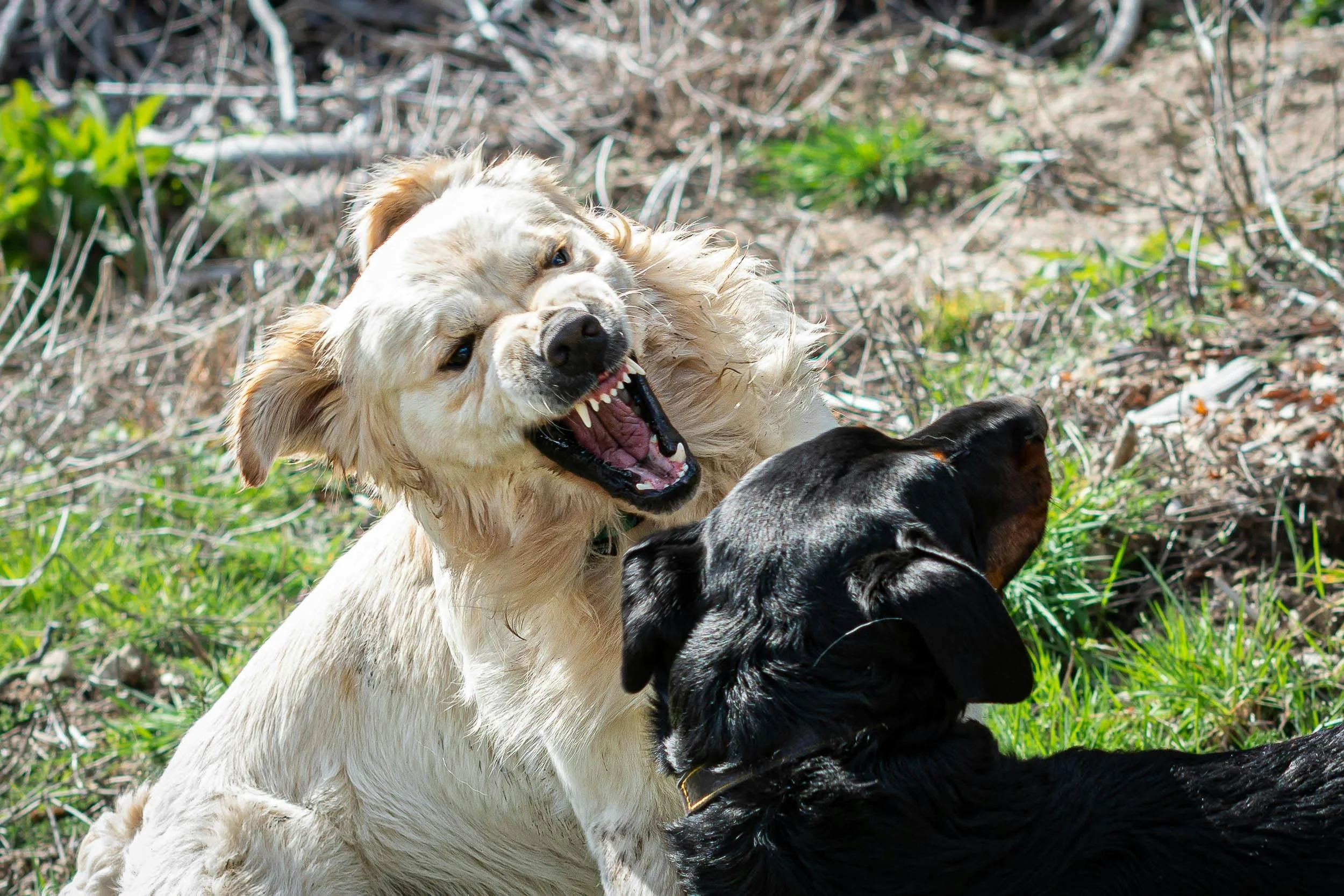
The worst-case scenario? Bites and fights.
When that happens, things get legal fast. Owners are always responsible for their dog—even if they weren’t actively supervising at the time. Add in emergency vet bills, potential lawsuits, and bite rules (hello, one-bite or two-bite laws), and suddenly that “quick park trip” has lifelong consequences.
Now, to be fair: studies show that aggression at dog parks occurs in less than 7% of interactions. That’s relatively low.
The bigger issue isn’t the dogs-it’s human awareness and supervision. Or lack thereof.
“But My Dog Just Wants to Play!”
Totally. That’s why we go, right?
But play is a slippery slope. Dogs typically greet each other with sniffing, then one of two things happens:
Play is initiated (play bows, bouncy movement).
One dog disengages and moves away.
Problems arise when a dog doesn’t respect the other dog’s signals. Especially when that dog is clearly saying, “No thanks.”
Dogs communicate motivation constantly:
Play motivation – loose, wiggly bodies
Antagonistic motivation – rough play, low growls
Appeasement – backing away, lowering posture, acting puppy-ish
Conflicting motivation – mixed signals and displacement behaviors
Reading the Vibes: Dog Edition
Polite behavior looks like:
Looking away
Sideways body posture
Relaxed stance
Neutral tail
Play bows
Lip licking
Confident / assertive behavior:
Standing tall over another dog
Hard eye contact
Closed mouth
Ears forward and alert
Anxious behavior:
Ears pinned back
Rigid body
Tense face
Low tail
Whale eye
If your dog misses the “I’m done” cues from another dog, it’s your job to step in and call them away. And if your dog can’t respond to you in that environment? A dog park probably isn’t the right setting just yet.
Play Styles Matter (A Lot)
Common play styles include:
Chase
Wrestling
Body slams
Play can switch between styles, and sometimes it’s loud and physical. Vocal or rough play doesn’t automatically mean aggression, but it does mean play styles need to match.
When they don’t? That’s when things escalate.
Breed tendencies can also play a role. For example, herding breeds like Border Collies love to chase and yes, sometimes nip. If the chased dog doesn’t appreciate that? The vibe can shift real fast.
Arousal Levels: Know Your Dog
Every dog has a threshold. When arousal gets too high, communication breaks down and the risk of conflict increases.
Your responsibility as an owner is to:
Know your dog’s threshold
Recognize when they’re nearing it
Step in before things tip over
Dog parks aren’t inherently bad but they’re not neutral spaces either. They require awareness, advocacy, and a whole lot of honesty about your dog’s needs.
Sometimes the most responsible choice isn’t “more freedom”… it’s better structure.